
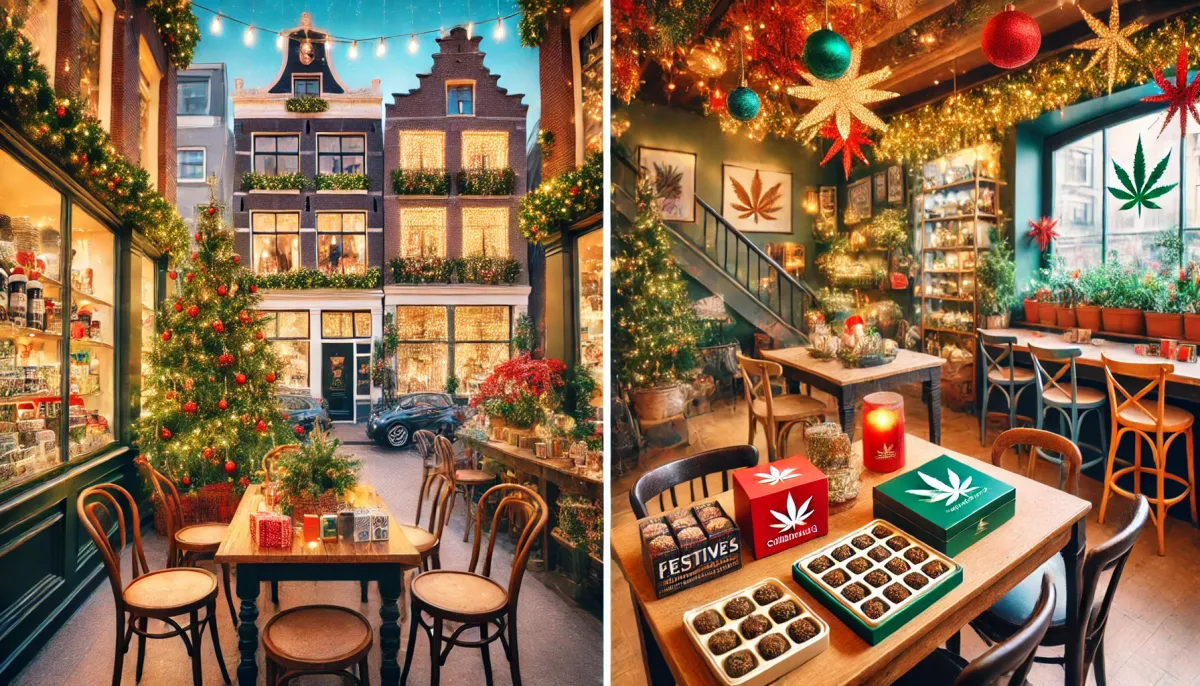
Christmas across two social settings
Christmas in Spain stretches from December gatherings into the Three Kings celebrations in January; the Dutch season places Sinterklaas gift giving earlier, on 5 December. Cannabis venues exist within these wider calendars. Their organization differs: Dutch coffeeshops serve customers under a toleration policy, while Spanish cannabis associations use a membership structure. The cultural contrast combines the timing of celebrations with the kind of relationship people have to a shared space.
Spain: Nochebuena and Reyes
The Christmas lottery on 22 December provides an early national gathering point, followed by the Nochebuena family dinner on 24 December. Spain’s official tourism office describes seafood and roast dishes among the foods associated with that evening. The festive season then extends through New Year to Reyes on 6 January.
The calendar makes Christmas a sequence of occasions across several weeks. Family meals, gifts and public celebrations occupy different moments. For adults with several social circles, the season brings together household life and the wider world of friends and associations.
The Netherlands: Sinterklaas before Christmas
In the Netherlands, the 5 December Sinterklaas celebration gives gift exchange its own place before Christmas. The Dutch tourism board also describes winter markets, seasonal food and illuminated city settings. The season thus has an early gift-giving landmark as well as later Christmas gatherings.
This sequence helps explain the difference between a December visit and Christmas itself. A social meeting early in the month belongs to a different point in the Dutch calendar from a Spanish Reyes gathering in January.
Coffeeshops: customer hospitality
The Dutch government's cannabis policy tolerates coffeeshop sales subject to conditions, including restrictions concerning minors, advertising, nuisance and hard drugs. Municipalities have a role in the local framework. The social relationship is commercial: people enter an establishment run by an operator.
A coffeeshop’s seasonal hospitality takes place within that continuing business relationship. Its décor or atmosphere is the expression of an individual venue, alongside the many other shops and cafés participating in the winter cityscape.
Associations: a continuing membership
Spanish association law gives a different structure to collective life. The general assembly is the highest governing body and meets at least annually; members have participation and information rights. This legal architecture connects the people using a shared space to decisions about the organization itself.
That continuing relationship is the most distinctive cannabis-related element of the comparison. A Spanish association and a Dutch coffeeshop may both be places for conversation, but one organizes membership and the other customer service. The longer Spanish season and the earlier Dutch Sinterklaas celebration provide two different cultural settings for those relationships.
Sources & further reading
General information, not individual legal or medical advice.