
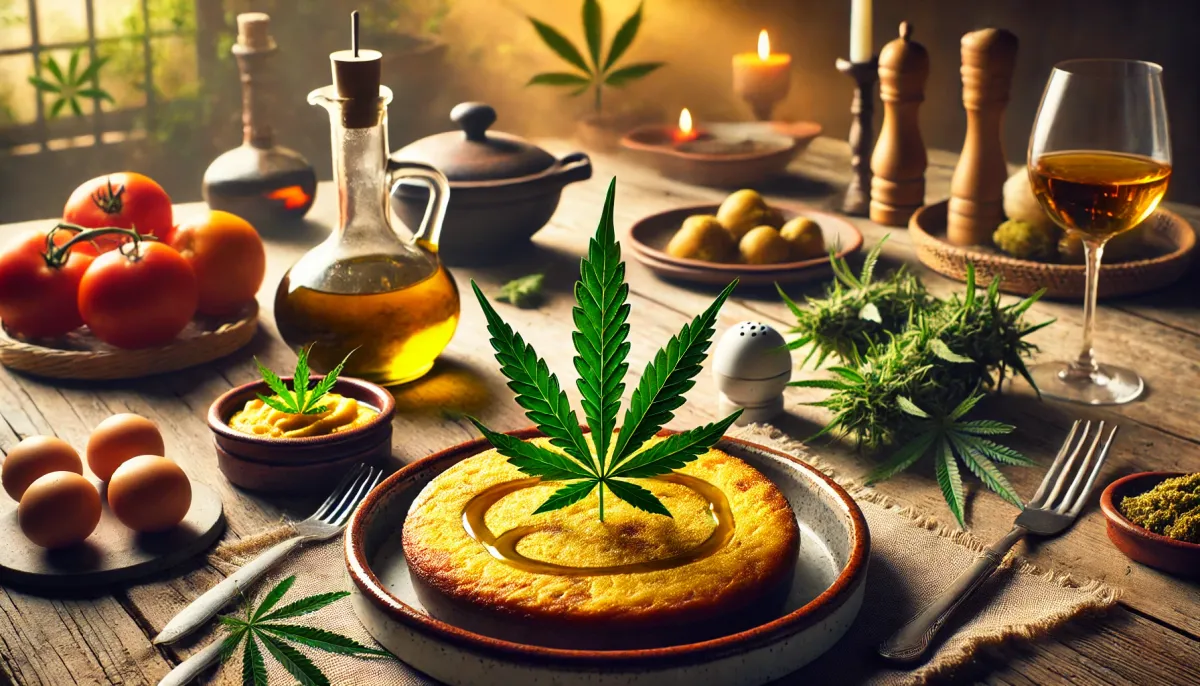
Seeds, oil and flour are different ingredients
Hemp reaches the food table as seeds, seed oil and ground seed flour, each with different culinary properties. ACSA identifies these forms among hemp ingredients with an established history of food consumption in the European Union. Oil contributes fat and aroma; flour contributes a mixture of seed solids whose behaviour differs from wheat flour. These are food ingredients in their own right. Their place in a dish comes from composition, flavour and texture, rather than an assumption that every hemp-derived ingredient produces cannabis intoxication.
The oil has a sensory vocabulary
A 2023 study developed a sensory wheel and descriptive vocabulary for cold-pressed hemp seed oil. The descriptors included seed-like, nutty, toasted-nut and hay notes, alongside sweetness, bitterness and pungency. The research also distinguished defects such as rancid, paint-like, burnt and fish-like notes. This vocabulary shows why two oils carrying the same ingredient name can taste different. Seed quality, processing and storage influence the finished sensory profile. Green or yellow colour is another characteristic, while aroma and taste describe separate parts of the experience.
Seed cake becomes a protein-rich ingredient
The solid material remaining after seed-oil production is known as seed cake. A 2023 food-science study examined flour made from this material and reported protein accounting for 31.62% of its dry matter. The researchers also identified minerals and polyphenols. This gives the material a potential role beyond animal feed: it can contribute nutrients to formulated foods. The reported composition belongs to the tested flour, so commercial ingredients with different processing histories can have different nutritional profiles.
Bread becomes nutritionally and physically different
In the same study, incorporating hemp seed cake flour into wheat bread raised protein and total phenol content. The bread also became less porous, harder and less resilient. Those changes reveal a genuine culinary trade-off: enrichment changes the structure of the food as well as its composition. The study's sensory ratings remained in favourable categories across its samples, despite the textural differences. Food development therefore concerns the relationship between nutrition and the eating experience, including crumb structure and firmness.
Added cannabinoids belong to another category
Seed ingredients and added CBD have different regulatory positions. ACSA's guidance updated on 21 September 2026 states that no cannabinoid novel-food authorisations had been granted in the EU. A favourable EFSA assessment of a specific synthetic CBD product was still separate from European Commission marketing authorisation. Hemp seed oil and flour retain their culinary identity as seed-derived foods; adding a cannabinoid changes the regulatory question as well as the composition.
Sources & further reading
General information, not individual legal or medical advice.