
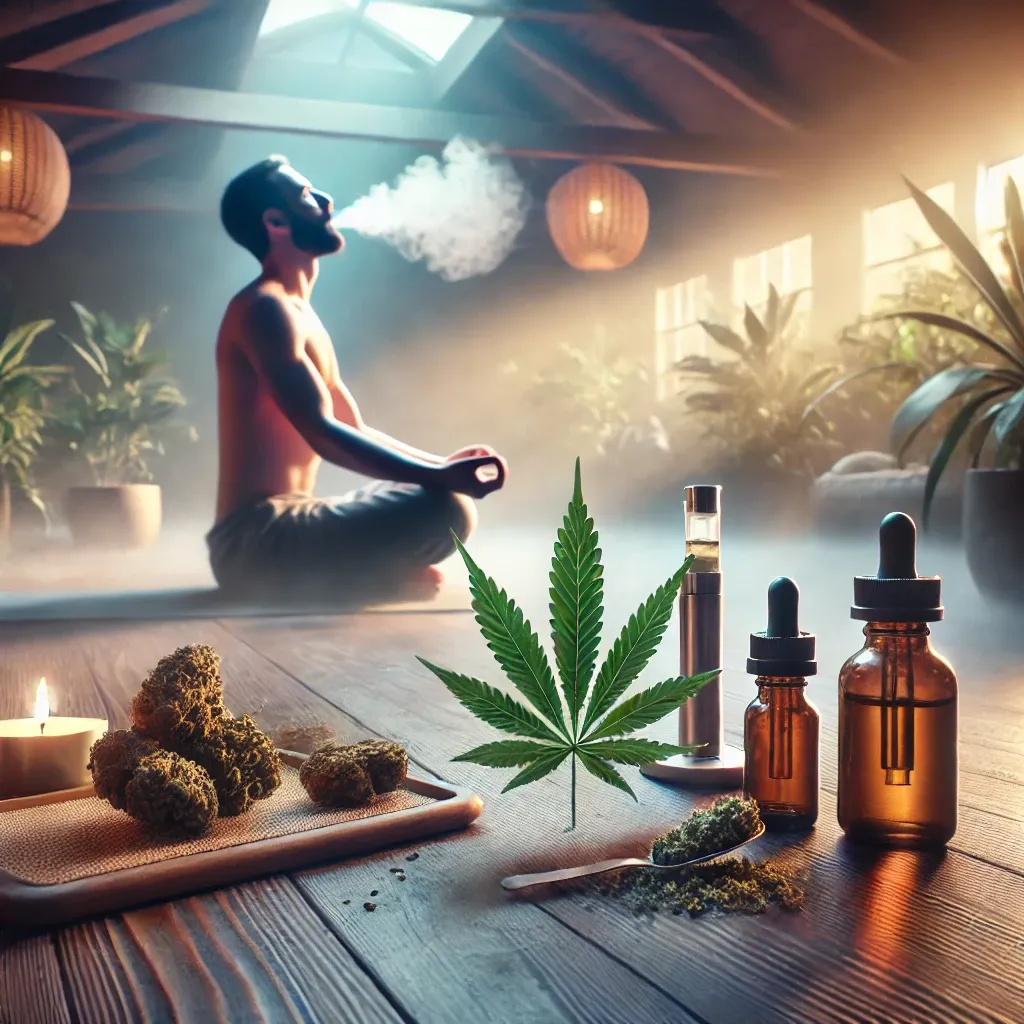
Intensifying a sensation is not improving a function
Pranayama directs attention to breathing, so a change in how time, bodily sensations or attention are experienced may feel especially prominent. Cannabis can affect those experiences. It does not follow that oxygen exchange, respiratory health or control of breathing has improved.
This is the central distinction in the cannabis-and-breathwork discussion: a subjective experience and a physiological outcome can move differently. A compelling session can be meaningful to the person without demonstrating that cannabis enhanced the function being practised.
THC can change the background rhythm of the body
A 2018 crossover trial in 17 healthy adults who used cannabis infrequently compared smoked and vaporised cannabis with placebo conditions. Heart rate and blood THC peaked within 30 minutes and returned toward baseline within three to four hours. Some subjective effects and cognitive or psychomotor impairments lasted longer.
For a breath-focused practice, this provides a concrete alternative to assuming that every bodily change represents relaxation. A person may be paying close attention to breathing while also experiencing a drug-related increase in heart rate. The study did not test pranayama, but it demonstrates why perceived calm and cardiovascular response cannot be treated as the same measurement.
The airway experience has a longer history than one session
In the Dunedin birth cohort, researchers followed cannabis use and respiratory symptoms across assessments from ages 18 to 38. Frequent use was associated with morning cough, sputum and wheeze after adjustment for tobacco smoking and other factors. Reducing or stopping cannabis was associated with symptom prevalence falling toward that of nonusers.
The study was observational, yet its repeated measurements give it relevance beyond a single impression immediately after use. For someone interested in breathing, an irritated airway is not a secondary detail. Smoke exposure and the mental experience of cannabis belong to different parts of the same discussion.
Breathing practices have their own measurable effects
A 2023 randomised study compared brief structured breathing practices with mindfulness meditation over one month. Breathwork, particularly an exhalation-focused condition, produced greater improvement in positive mood and a greater reduction in respiratory rate than the meditation condition. This research provides an example of evaluating a breathing practice through defined outcomes.
Its relevance is the measurement itself: mood and respiratory rate were examined separately. A breath practice can be studied without assuming that a stronger sensation is a better result. It is not evidence for a cannabis-breathwork combination.
A more precise account of the experience
The cannabis trial recorded an early rise in heart rate; the Dunedin cohort linked frequent use with cough, sputum and wheeze. The breathwork trial instead recorded improved positive mood and a lower respiratory rate, especially with exhalation-focused practice. These are distinct cardiovascular, airway and mood outcomes. None of these studies tested whether cannabis improved pranayama.
Sources & further reading
General information, not individual legal or medical advice.