
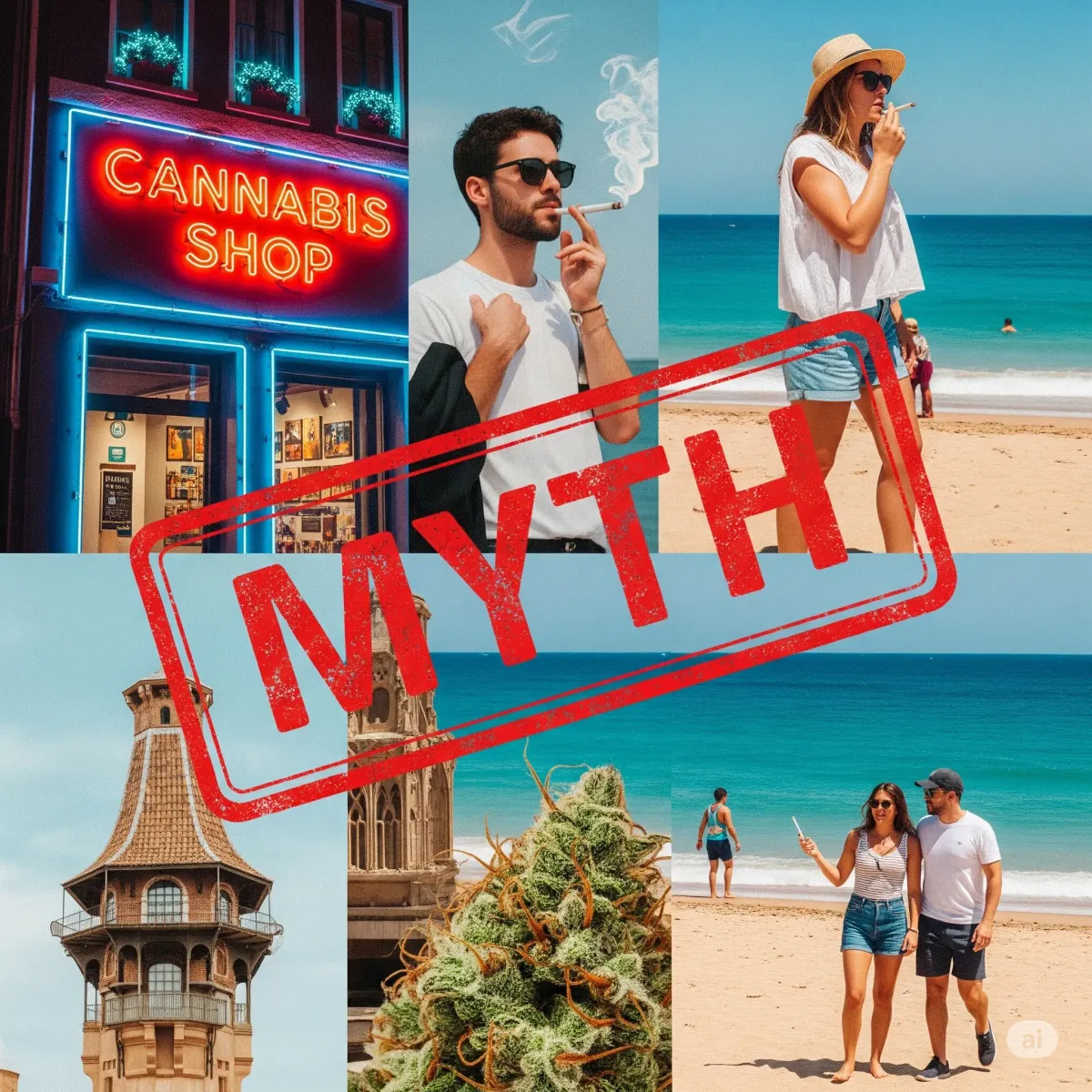
1. Registration is a cannabis retail licence
Registration establishes an association within a legal framework for organisations. Spain's association law governs its purposes, statutes, bodies and members' rights. It does not create a general cannabis retail authorisation. The activities an organisation carries out remain subject to the laws governing those activities. An association's existence and the legality of a particular supply arrangement are therefore separate questions.
2. Nonprofit status settles the criminal question
Nonprofit status describes how an organisation uses its economic proceeds. Under association law, those proceeds must serve its purposes rather than be distributed to members. Criminal Code Article 368 also covers promoting, favouring or facilitating illegal consumption. A conventional commercial profit is not the only issue considered. Conduct and purpose matter alongside the financial structure.
3. Membership gives permission everywhere
Membership creates a relationship with an association, including the rights and duties in its statutes. It does not alter the national public-space rule. Article 36.16 of the Citizen Security Law addresses unlawful possession or consumption in public places, public establishments and collective transport, even without trafficking intent. A membership document does not create an exception to that rule.
4. Every club has the same membership rules
Association statutes specify admission and departure, rights, duties and governing arrangements. These can differ between organisations. A description of one club cannot establish the rules of every other club in Valencia. Nor does a general online statement establish a person's legal position. The association's own governance and the wider applicable law both remain relevant.
5. A club is part of the medical prescription system
Spain's Royal Decree 903/2025 established a pharmaceutical framework involving standardised preparations, specialist prescribing and hospital pharmacies. Social-club membership belongs to a different institutional setting. A member describing their use as therapeutic does not turn the association into a hospital pharmacy or its products into prescribed medicines. The medical system assigns clinical and quality responsibilities to specified professionals and institutions.
6. A reassuring label proves laboratory quality
Laboratory quality depends on methods, sampling, calibration and what was actually tested. NIST's cannabis quality-assurance work addresses comparability of cannabinoid and contaminant measurements. A general quality slogan does not provide those results. Even a real report concerns the identified sample and tests performed; it should not be extended automatically to every product or every possible contaminant.
7. Private premises resolve every legal issue
Privacy changes the setting, but it does not independently authorise every activity carried out there. Criminal rules can concern production and facilitation as well as sale, while premises have their own operational requirements. The useful distinction is between a private location and a lawful activity. Neither a closed door nor an association name answers all the questions about what an organisation does.
Sources & further reading
General information, not individual legal or medical advice.