
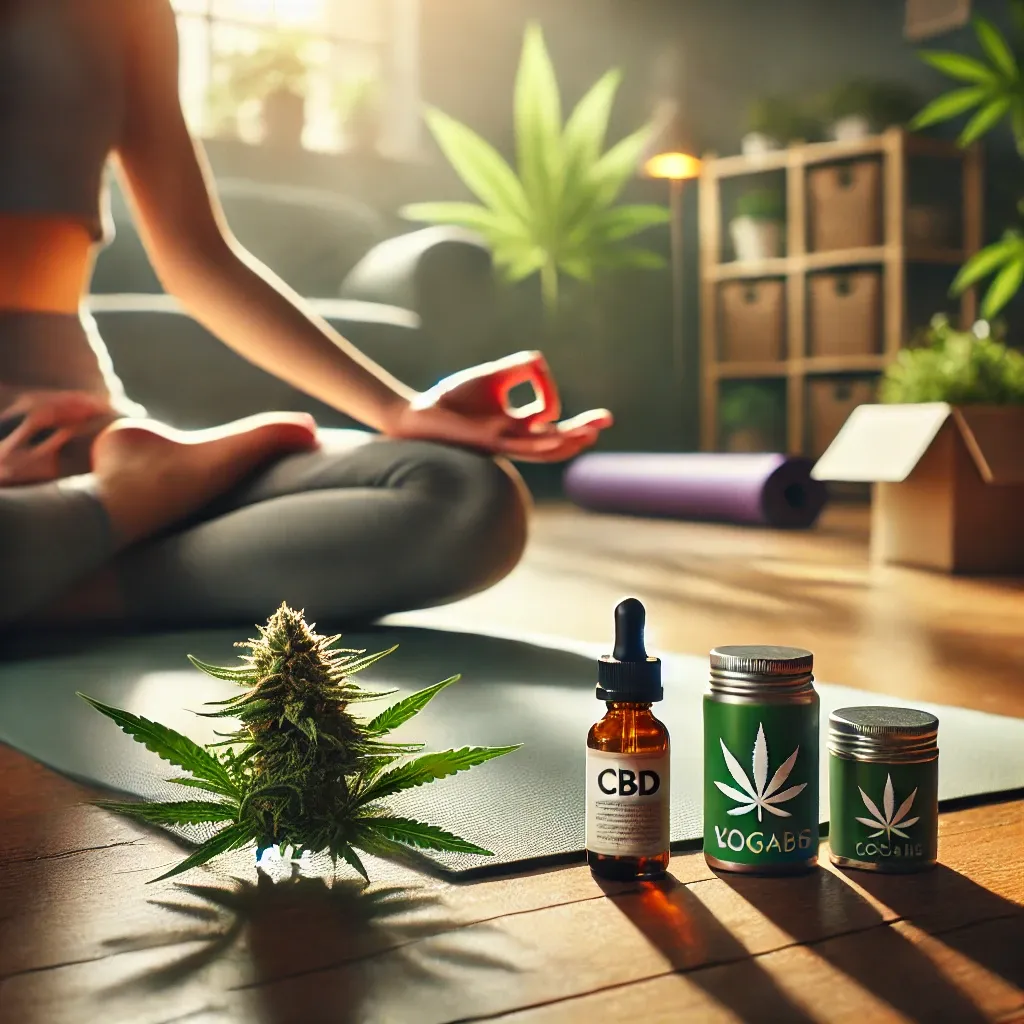
Three elements of a beginner practice
Yoga combines physical and mental activity. Modern classes commonly bring together postures, breathing practices and meditation, although yoga’s Indian philosophical traditions extend beyond exercise. A beginner class introduces these elements gradually: understanding a movement, following an instruction and noticing breathing are skills in their own right. Cannabis is not a required component of any of these processes.
What yoga research supports
The US National Center for Complementary and Integrative Health describes evidence of possible benefits for stress, sleep and balance. For chronic low-back pain, a 2022 review of 21 studies involving 2,223 people found a small benefit compared with no exercise; it was unclear whether yoga differed from other exercise. These findings concern structured yoga programmes. They do not establish that adding THC or CBD improves the result.
Why intoxication changes the task
CDC identifies attention, memory, decision-making and coordination among the functions cannabis can affect. Those functions also matter when learning a sequence, shifting weight or responding to an instructor. Feeling more absorbed in a session is therefore different from moving more accurately. For a beginner, an unimpaired class provides a clearer starting point for learning the movements and recognising ordinary effort or discomfort.
A suitable starting class
NCCIH recommends qualified instruction and advises newcomers against extreme practices such as headstands, shoulder stands and forceful breathing. A beginner session can focus on manageable movement rather than flexibility as a competition. Injuries and health conditions may require adaptations discussed with the instructor and, where relevant, a clinician. The practical foundation is a suitable class, gradual learning and regular attention to the body; a cannabis-themed label does not change those requirements.
Sources & further reading
General information, not individual legal or medical advice.