
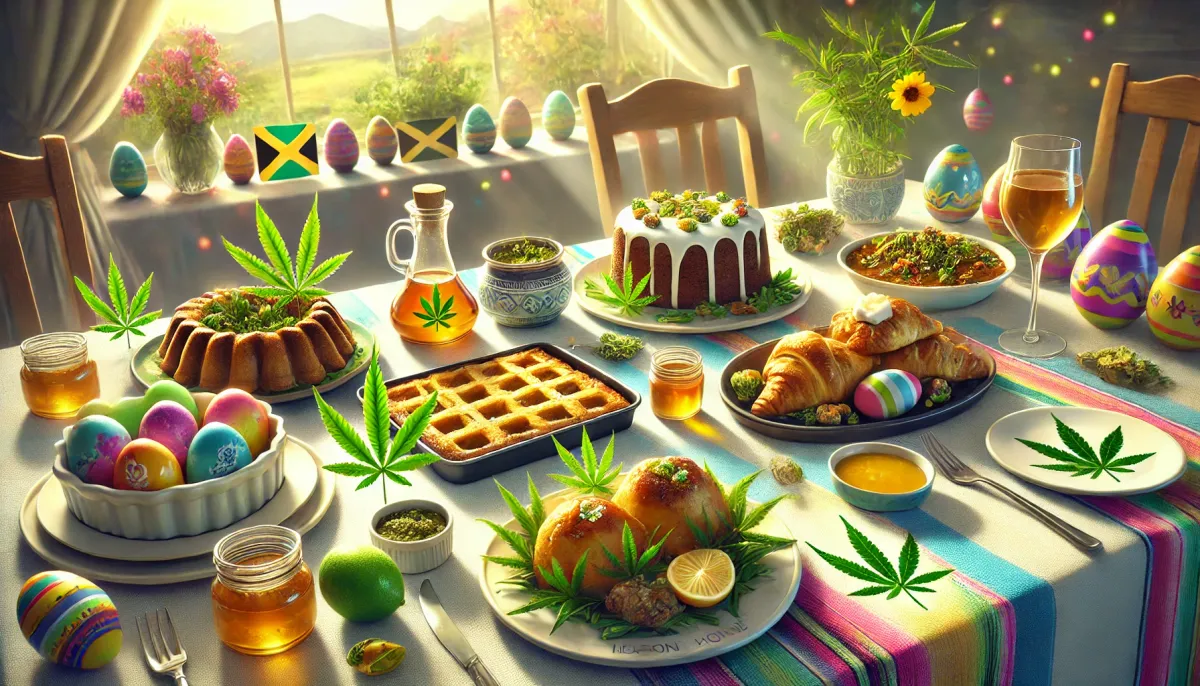
A festive dessert and a cannabis edible are different things
Cannabis can turn an Easter dessert into an intoxicating edible, but it does not explain the dessert’s place in the festival. Spain’s torrijas and monas de Pascua, and Italy’s colomba, belong to distinct culinary traditions. Their ingredients, shapes and occasions already provide plenty to compare without treating a modern cannabis addition as an inherited Easter custom.
The useful distinction is between food as a shared cultural object and food as a vehicle for a psychoactive substance. They may look identical on a plate while producing very different experiences for the person eating them.
Torrijas and monas: two Spanish forms
A torrija transforms bread into a soft, sweet preparation, commonly associated with milk, egg and a fried exterior. Its interest lies in the contrast between a familiar staple and a festive texture. It also belongs to a broader kitchen logic of making something desirable from bread that is no longer fresh.
Mona de Pascua refers to Easter baking particularly associated with Spain’s eastern regions. The name encompasses regional variation rather than one universal appearance: breadlike forms and decorated cakes belong to different local expressions. The social occasion matters as much as the object. Sharing an Easter sweet makes the calendar tangible through a food that people recognise as belonging to that time.
Italy’s colomba and the making of tradition
The colomba supplies another comparison. Its dove shape distinguishes it immediately from a round cake, while its modern commercial history connects it with Milanese confectionery and the production of panettone. Italy’s national tourism portal traces the familiar commercial version to the 1930s and Dino Villani’s work for Motta.
That history shows that a tradition can be both meaningful and comparatively recent. It does not need an invented ancient origin. Equally, calling a cannabis dessert a fusion describes a contemporary culinary idea; it does not establish a historical connection between cannabis and these Easter sweets.
Why THC in food changes the experience
Ingested THC is absorbed through digestion and metabolised, including into the active compound 11-hydroxy-THC. The timing differs from inhalation. Health Canada describes onset commonly taking 30 minutes to two hours, with full effects potentially taking up to four hours. This delay helps explain why a dessert can seem ordinary at first while intoxication develops later.
A slice’s size or sweetness does not reveal its THC content. The familiar appearance of a cake therefore cannot communicate the information that matters about a psychoactive ingredient.
The shared table depends on clear identity
Easter food is often offered, exchanged and eaten in family settings. A psychoactive ingredient changes that ordinary expectation. FDA reports on accidental ingestion by children identify confusion between THC products and conventional foods as a concrete problem, especially where packaging or appearance resembles familiar sweets.
The cultural comparison remains richest when the foods retain their identities: torrijas as transformed bread, monas as regional Easter baking, and colomba as a shaped festive cake with a documented commercial history. Cannabis introduces a separate pharmacological question; it is not an invisible flavour variation in a shared dessert.
Sources & further reading
General information, not individual legal or medical advice.