
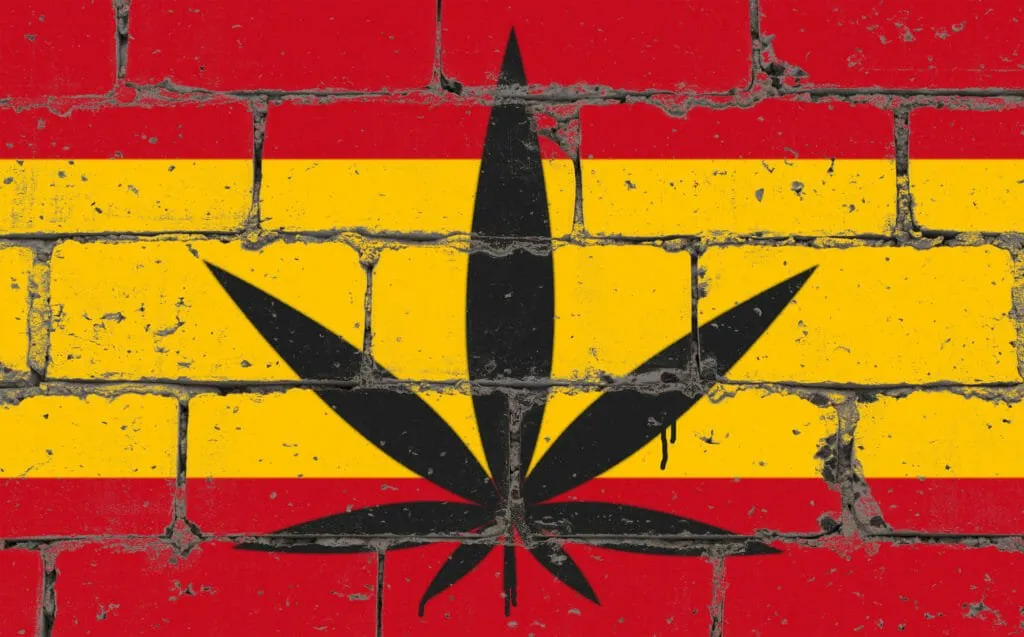
Spain has several cannabis frameworks
Spain’s cannabis landscape combines national criminal law, public-security rules, ordinary association law and a specific medical framework. They answer different questions. Whether conduct is criminal, whether a public-space fine applies and whether an association exists legally cannot be resolved by a single claim that cannabis is legal or illegal.
The cultural scene is equally varied. Hemp textiles, museum collections, patient advocacy and contemporary cannabis associations are parts of that history, with different relationships to the plant. A museum display or a registered organisation does not create an exception to the rules on conduct.
Public possession and supply are separate issues
Article 36.16 of Organic Law 4/2015 treats illicit drug use or possession in public places, roads, public establishments and collective transport as a serious administrative offence, even where trafficking is not intended. That provision explains why the distinction between private and public space matters to everyday conduct.
Criminal Code article 368 addresses cultivation, production, trafficking and acts promoting or facilitating illegal consumption, alongside possession for those purposes. Being indoors does not remove the supply question. Conversely, the public-possession rule should not be described as though every incident is automatically a trafficking prosecution. The facts and the relevant legal provision matter.
Associations have rights and responsibilities
Organic Law 1/2002 provides the general framework for associations. Statutes define purposes, membership and governing bodies; the general assembly is the principal decision-making body. Members have rights to participation and information, and the organisation must maintain appropriate records and accounts.
Those are organisational rules. Registration establishes an association within that framework; it is not a retail cannabis licence. The Constitutional Court’s judgment 100/2018, which annulled Catalonia’s 2017 cannabis-association law, is a useful reminder that regional initiatives also operate within Spain’s constitutional division of powers.
Medicine has developed through a different route
Royal Decree 903/2025 established the framework for standardised cannabis preparations used in magistral medicines. It assigns roles to specialist clinicians and hospital pharmacies. AEMPS’s 2026 monograph supplies the associated pharmaceutical standard.
This development concerns clinical treatment and pharmaceutical oversight. It should be understood through its prescribing, preparation and follow-up requirements, rather than as a general change to recreational retail. Keeping those categories separate makes the significance of the medical reform clearer.
Hemp heritage gives the cultural story depth
Cannabis history in Spain extends beyond contemporary clubs. Castelló’s Llotja del Cànem, built between 1606 and 1617, recalls the importance of hemp trading to the city; Universitat Jaume I now uses it as a cultural space. Barcelona’s Hash Marihuana & Hemp Museum opened in 2012 in Palau Mornau and presents the plant through historical collections.
These places offer concrete ways to understand fibre production, commerce and changing attitudes. Together with present-day legal and medical debates, they show why Spain’s cannabis culture is best approached as several connected histories, rather than one uniform national model.
Sources & further reading
General information, not individual legal or medical advice.