
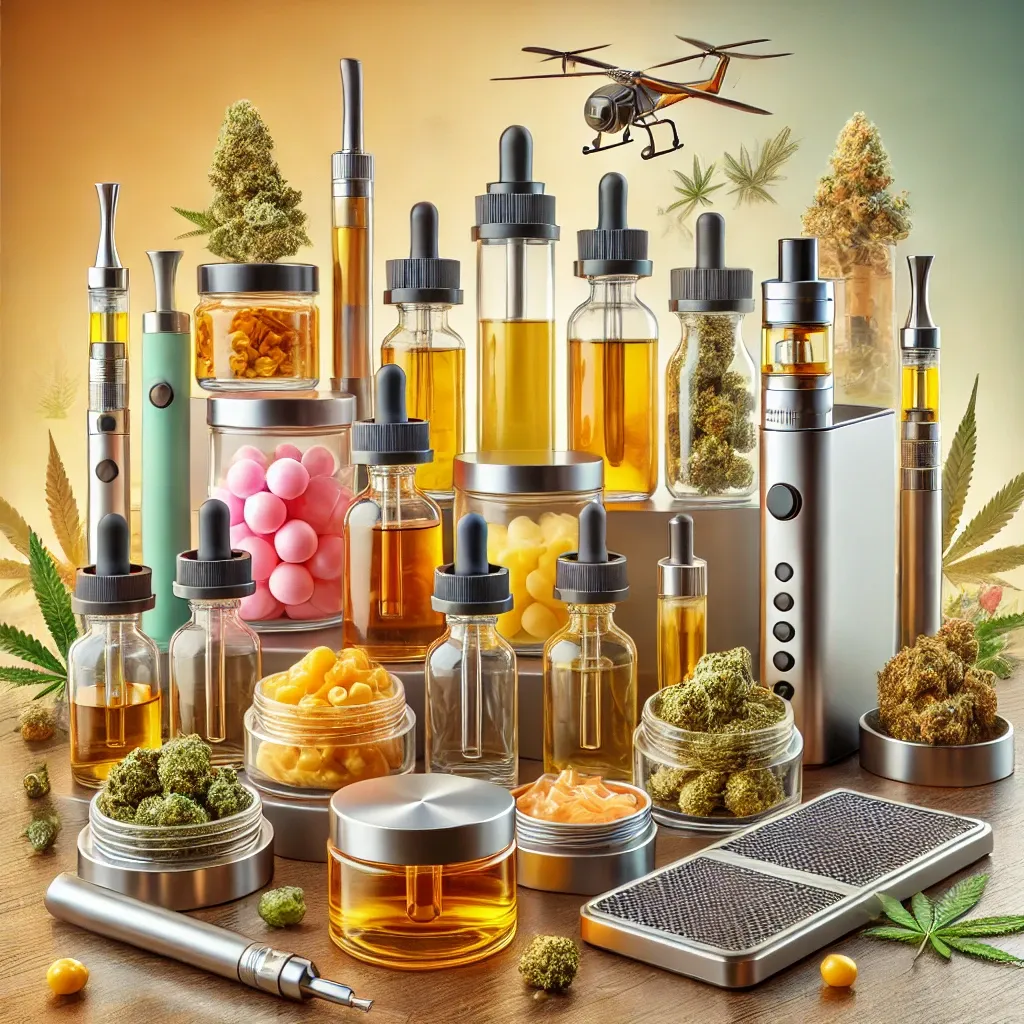
Quality belongs to the whole system
Cannabis vaporizer quality depends on three connected things: the starting material, the device and the aerosol reaching the lungs. A chemically characterized extract can interact with cartridge components; a precise-looking device can contain poorly characterized material. The product is therefore a system, not just a liquid or a battery. That explains why THC strength alone cannot describe inhalation quality.
Different devices heat different materials
Dry-herb devices heat plant material, while cartridge devices heat a liquid extract; other devices are designed around solid concentrates. These categories differ in the material touching the heating components and in the resulting aerosol. Desktop or portable describes the format, not a separate toxicological standard.
The word vapour can suggest pure gas, but inhaled output is an aerosol: particles and droplets suspended in air. Its composition may include cannabinoids and other substances originating in the material or device. Removing combustion changes the exposure profile; it does not turn the output into clean air.
The cartridge can change the chemistry
A 2022 study in ACS Omega examined metal content in liquids from 20 legal and 21 illegal Canadian vaping devices. It identified metal particles as a problem for measurement reproducibility. Particles are not necessarily distributed evenly through a liquid, so small laboratory samples can give different results.
A separate study analysed cartridge components and aerosols from 13 commercial cannabis cartridges from Washington State. Together, these investigations show why hardware belongs in the quality discussion. A test of the starting liquid and a test of the aerosol answer different questions.
What the 2019 lung-injury outbreak established
The United States EVALI investigation linked vitamin E acetate in THC vaping products strongly to the outbreak of lung injury. CDC found the additive in product samples and lung-fluid samples. A substance familiar from other uses had become hazardous in a particular inhalation context.
The episode demonstrates that an ingredient’s reputation in food or cosmetics does not establish its suitability for the lungs. It also explains why the full formulation matters alongside cannabinoids. A flavour description and a potency percentage leave the additive chemistry largely invisible.
Laboratory quality involves more than strength
NIST’s cannabis measurement programme combines analytical methods, reference materials and interlaboratory comparisons. These tools address whether measurements are accurate and comparable, including for cannabinoids and toxic elements. A reference material gives laboratories a shared point of comparison; it is not a certificate for every commercial product.
For cannabis extracts, a meaningful quality description therefore separates cannabinoid composition, contaminants, device materials and aerosol behaviour. Spanish readers encounter international products and terminology, but a finding from Canadian or US samples describes those studies—not the prevalence of contamination in Spanish clubs.
Sources & further reading
General information, not individual legal or medical advice.