
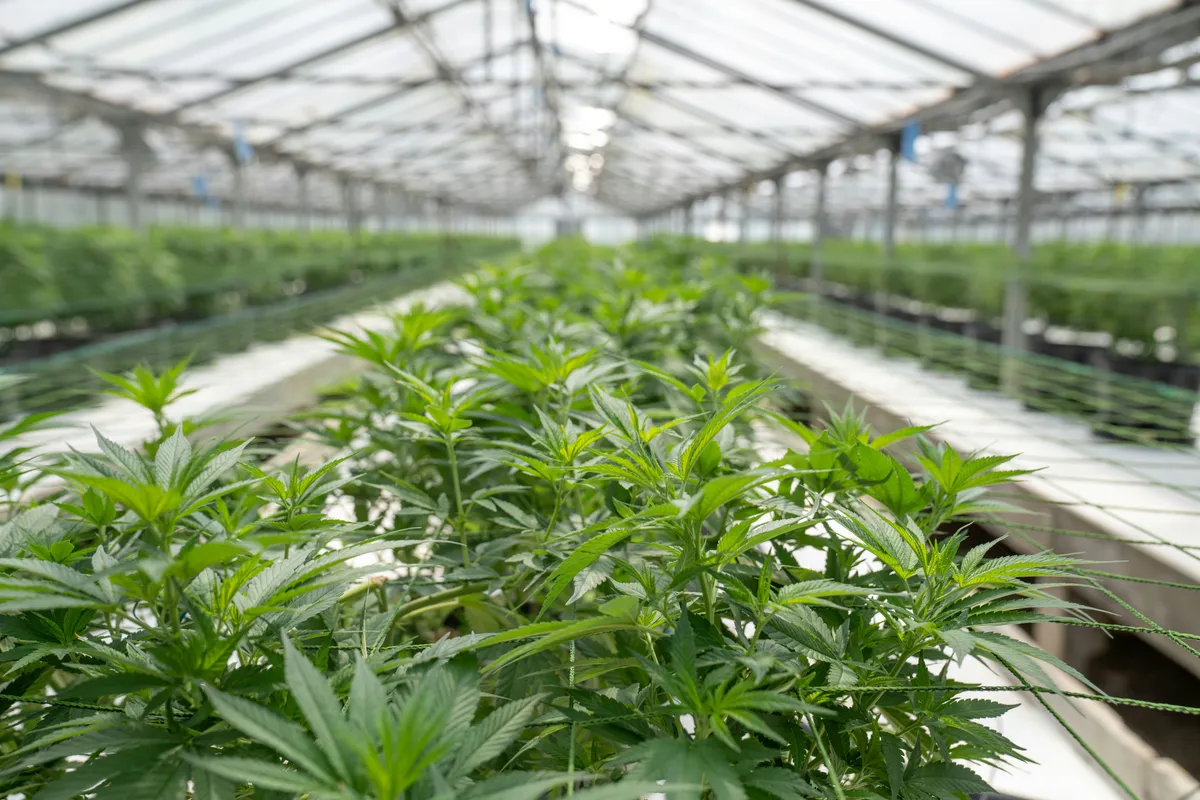
One country contains very different climate records
Spain’s hemp history belongs to particular landscapes, not a single national climate. Valencia’s Mediterranean setting and the wetter surroundings of Bilbao provide a useful comparison. AEMET publishes station normals: averages over a defined thirty-year period. These describe climatic background, not the weather of a particular season or the properties of a cannabis product.
Valencia: warm averages and a dry summer pattern
For 1981–2010, AEMET’s València station records an annual mean temperature of 18.3°C and 475 mm of precipitation. July averages 8 mm of rain, compared with 77 mm in October. The annual total therefore conceals a marked seasonal distribution. These are historical station averages, not a current-year forecast.
Bilbao Airport: a different rainfall picture
For the same 1981–2010 period, Bilbao Airport records 14.7°C and 1134 mm annually. July averages 50 mm of rain. Compared with Valencia, that is a cooler annual mean and substantially more precipitation, including in midsummer. Two Spanish locations thus show clearly different conditions within the same reference period.
Hemp heritage also reflects water and work
Callosa de Segura’s official heritage account locates its hemp tradition in the irrigated Segura landscape. It records thirteenth-century disputes over water affected by historical hemp processing and later networks of fibre workers, rope makers and net makers. The landscape was social and economic as well as climatic.
A national adjective such as ‘Spanish’ cannot capture those local relationships. Climate records describe temperature and rainfall; soil is a separate physical medium; historical production also depended on labour, water systems and demand for finished goods. None of those categories alone establishes a product’s quality. The geographical story becomes clearer when a place, a period and an activity are named together.
Sources & further reading
General information, not individual legal or medical advice.