
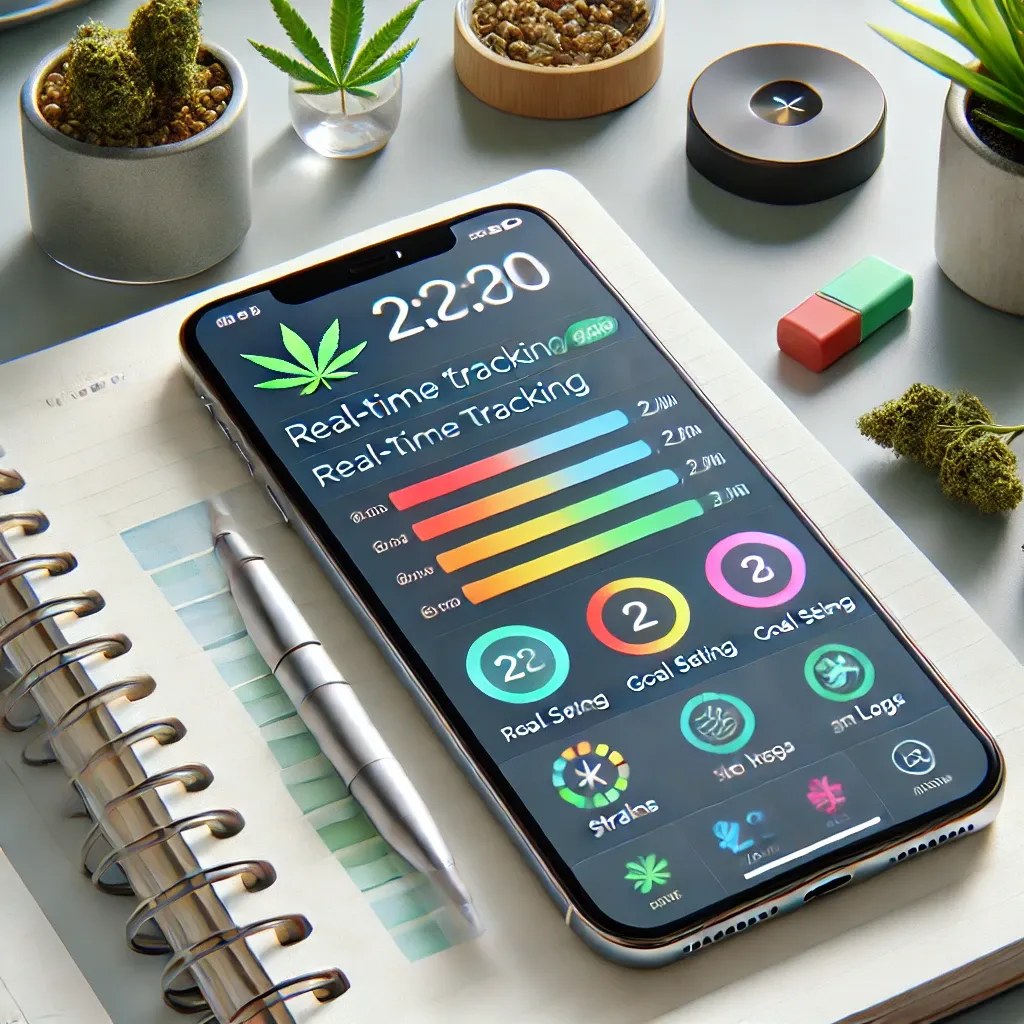
Turning recollection into a record
Cannabis diary apps organise self-reported experiences over time. Releaf and Strainprint both document sessions and symptoms, making it possible to revisit what a person reported instead of relying entirely on memory. Their records can include the product, the reason for use and subsequent effects. The central function is a structured timeline: a symptom before an episode, an experience afterward and a history of entries that can be reviewed together. This is observational information about the person completing the diary.
Releaf: sessions and monthly reports
Releaf's published feature guide describes immediate reports after each session and monthly reports grouped around products, sessions and reasons for use. It also records onset, duration and additional feelings through icon-based entries. Those features give the diary two time scales. A session report captures a particular episode; a monthly view gathers repeated observations. Duration and onset add information that a single overall satisfaction score would omit, allowing the written record to distinguish when an experience began from how long it lasted.
Strainprint: a searchable personal history
Strainprint describes a personal log, a history searchable by effects and records that can be shared with a healthcare provider. Its data-collection documentation identifies the mobile journal as the source of patient-reported information. The company also uses app data for analytics, and its published promotional page describes rewards attached to tracked sessions. The personal diary therefore sits within a broader commercial data service. Its practical documentation function is to preserve reports that can otherwise become difficult to recall accurately across repeated experiences.
What researchers found in those records
A Washington State University study published in 2018 analysed roughly 12,000 Strainprint entries concerning depression, anxiety and stress. Users reported immediate reductions in symptoms, while the longer-term depression pattern was less favourable. A separate 2020 study followed more than 1,800 recorded sessions from 87 people reporting obsessive-compulsive symptoms. Reported short-term reductions in intrusive thoughts became smaller with continued use, whereas the relationships for compulsions and anxiety remained relatively stable. The contrast between immediate ratings and patterns over time is precisely what repeated records can reveal.
A diary and a clinical conclusion
These studies analysed self-selected users' reports rather than assigning people randomly to treatment and placebo groups. Expectations, natural symptom changes and the circumstances of each session can therefore contribute to the recorded pattern. The records nevertheless preserve specific experiences: a changing symptom, an unwanted effect or a repeated timing pattern. In a clinical conversation, that history supplies concrete observations for assessment. A diary records what happened and how it felt; determining why it happened requires a wider view of health and treatment.
Sources & further reading
General information, not individual legal or medical advice.