
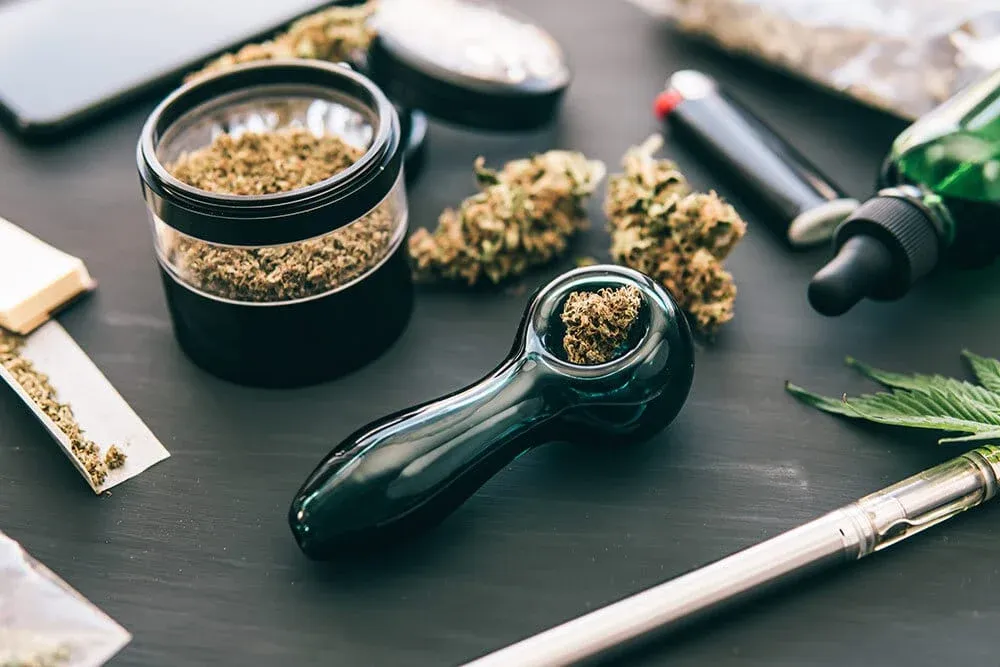
Combustion, aerosol and storage
Papers and conventional pipes burn material and produce smoke. Vaporisers heat material to produce an aerosol. Containers serve a storage function. These physical differences determine the form of exposure; the composition of the material remains a separate part of what reaches the lungs.
Water does not turn smoke into clean air
A water pipe changes the path smoke follows, but it remains a combustion-based device. The CDC’s lung-health information explicitly includes water pipes among cannabis smoking methods and states that smoked cannabis can harm lung tissue regardless of the method.
Cannabis smoke contains irritants and toxic compounds also found in tobacco smoke. A cooler or less harsh sensation is therefore not a measurement of toxicant removal. Comfort in the throat and health effects in the respiratory system are different outcomes; one cannot stand in for the other.
Vaporisation can change THC delivery
A 2018 crossover trial in 17 infrequent cannabis users compared controlled smoked and vaporised conditions. At equivalent tested THC amounts, vaporisation produced stronger effects for many measures and higher peak blood THC concentrations. Some cognitive and psychomotor effects persisted after the immediate peak.
This result matters because a device associated with less combustion may still alter the amount of active drug reaching the person. Less smoke and less intoxication are not synonymous. The trial examined particular products and equipment under controlled conditions, so it does not provide a universal ranking of commercial vaporisers.
Cartridge composition is another question
The 2019–2020 US outbreak of vaping-associated lung injury highlighted the importance of formulation. CDC investigations linked vitamin E acetate strongly with the outbreak, particularly in THC products obtained through informal sources. Investigators found the substance in product samples and lung-fluid samples from affected patients.
That finding should not be flattened into the claim that every aerosol device is identical. It shows why the liquid or material being heated matters alongside the equipment. An attractive cartridge, familiar flavour or professional-looking package does not answer a chemical-composition question.
Consumer devices and the medical framework
Spain’s cannabis magistral framework assigns preparation and dispensing responsibilities to hospital pharmacies and prescribing responsibilities to specialists. It also includes clinical follow-up. A retail accessory has none of those clinical functions simply by being marketed for cannabis; its heating or filtration system describes a physical process.
Sources & further reading
General information, not individual legal or medical advice.